
One of the skills I want to walk away with by the time I graduate (which is in a month or so) is to become a better orator. I’ve been shy since I was young and I almost never used to participate in class up until high school because I had anxiety about how my voice sound and about what I was saying. Becoming more interested in reading and writing has actually made me a better speaker; in high school, I participated more and engaged in more oral presentations because I liked the humanities and English classes. While I’m not the most effective oral presenter, I think I can still recognize the qualities of people who are better at publicly speaking than me and try to incorporate those into my own presentation.
So, what makes a good presentation?
Here are five things that I think make an effective, appealing, and engaging oral and visual presentation.
1. Make a visually appealing presentation.
To go along with your oral presentation, you need to make a slideshow or a visual presentation to accompany it. Visual representations can help to absorb the information from a spoken presentation. But this also means that the presentation must be visually appealing. Don’t use neon text on a white background or dark text on dark backgrounds. While it is important to keep your audience engaged, it is doubly important to make sure that the presentation doesn’t strain the eyes or make it difficult to read the information. Including pictures, gifs, and videos will also help to maintain engagement and make the presentation nice to look at. In my own presentation, I will probably use a pre-made template that has nice colors and a neutral background, and also include relevant images and videos.
2. USE THE PRESENTATION AS AN ACCESSORY TO YOUR ORAL SPEECH.
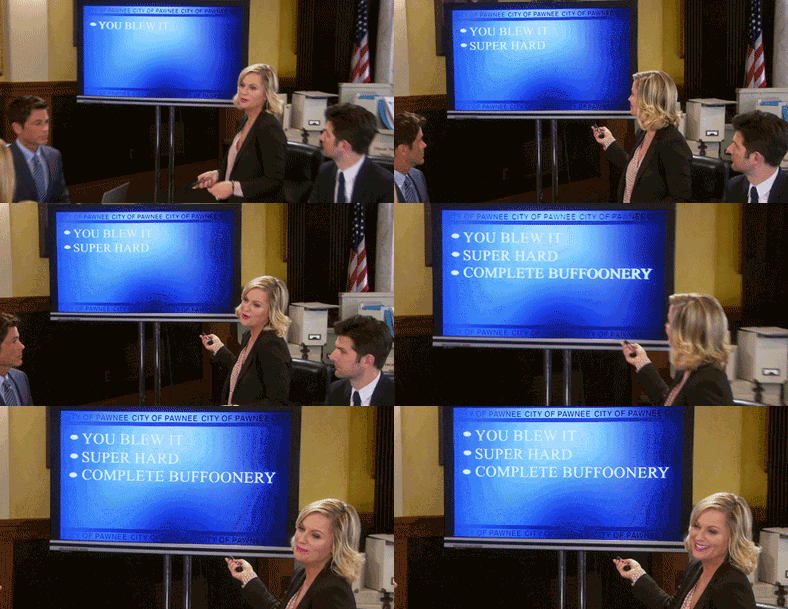
I’ve been guilty of writing my whole oral presentation on slides and then just reading off them. However, this makes for a bland and boring presentation; it makes you sound like a robot, reading off slides. If we wanted to read what you were going to write about, we’d read your paper. I think oral presentations are all about allowing presenters to talk about concepts, ideas, and arguments in more natural ways. By putting key bullet points or speaking points on slides, and then using them as a jumping off point to talk more specifically about your paper, it can make for a more engaging presentation. This will allow the audience to focus solely on what you’re saying, rather than on reading the slide.
3. oRGANIZATION IS KEY.
Perhaps this also falls into making your presentation visually appealing, but I think organizing your slides in a logical and natural way is really important to the cogency and story of your presentation. Moving from one idea to the next without fully explaining what they are and what they mean in your paper feels disjointed and confusing.
I’m writing about how the AI’s we have encountered in our readings have impacted understandings around love, intimacy, and relationships. I’ve chosen a few key books and movies that I’d like to talk about, so I will probably organize my slides by work, noting down characters and the ways AI and other intelligent technologies have altered how humans interact with each other and with technology.
4. PRACTICE MAKES PERFECT.

It’s very easy to get hung up on the idea that we can’t make any spoken stumbles while putting together an oral presentation, and that in order to perfect it, we have to write out pre-written notecards that we read off of or we have to memorize what we want to say. To a certain degree, I think we should have a good idea of what we are going to say before we present — but I also think your natural speaking tone is one of the most important factors in making your presentation engaging and illuminating. My problem is that I get too nervous and rely too heavily on notes I’ve written down, reading them aloud to a T. However, I think practicing what you want to say and making sure your speech sounds natural will help you succeed. It’s okay to stumble a little bit when you practice and take a moment to remember your thoughts, but the more you practice what you want to say, the better your presentation will be on the actual day. You will sound fluent and confident in what you have to say, and it will make your presentation stand out. Since we also have a time limit, this will also give you a better idea on how long it takes for you to explain or present your ideas, and you won’t go too much over or under ten minutes.
5. BE CLEAR AND CONCISE.
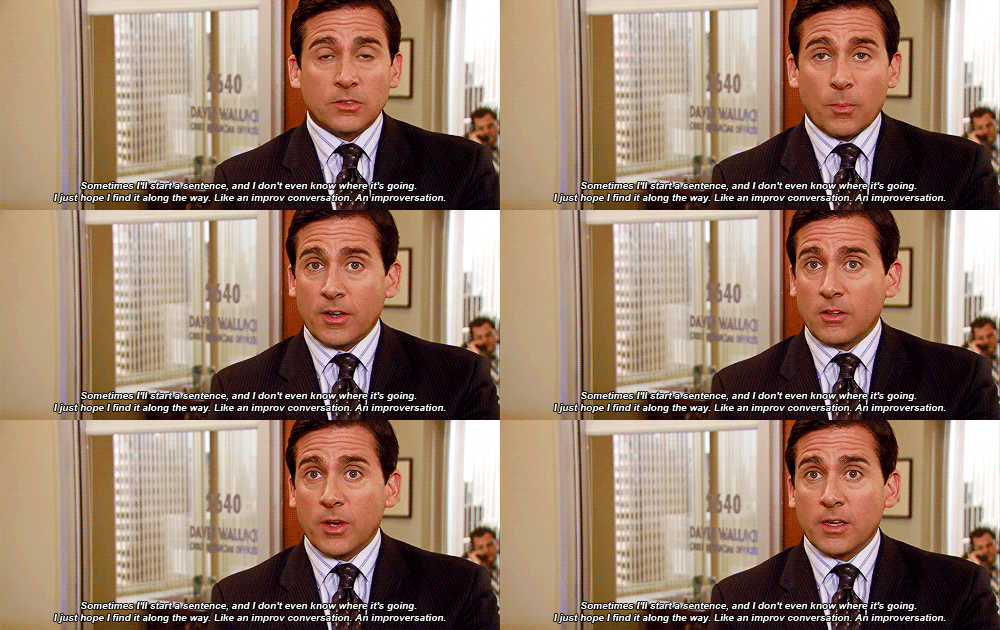
It’s important to be clear and concise in your writing, and that is also true for oral presentations. Your ideas, even if they’re complicated, should be explained clearly so it’s easy for the audience to understand, and in a concise manner (since we only have ten minutes to present). Keeping your sentences brief will also help people to retain information, and it’ll keep the audience engaged. This also ties back to my previous point about practicing what you’re going to say. If you practice or if you know what you’re going to say before you present, there’s less of a chance of accidentally going on a longwinded rant about something that might stray away from the central ideas of your presentation. Try to stay focused on your core ideas or arguments.
 Artificial Intelligence in Literature and Film
Hey Andrea! I’m also someone who didn’t really like speaking in class and in all honesty still don’t, even in my mid twenties, go figure. I have just never liked the attention, but I know this is a skill that a lot of employers want someone to have so I try to fight through it as best as I can. I like that you said to use the presentation as an accessory to the oral presentation. It’s important to remember that the slide show isn’t solely the presentation, but everything as a whole. Practice does make perfect and I feel the more you practice the less rushed it will feel, because I can definitely a very fast talk when I am nervous. It’s just word vomit for me sometimes! You have some great tips and I love The Office gifs!
LikeLike